Focus · UAE Digital
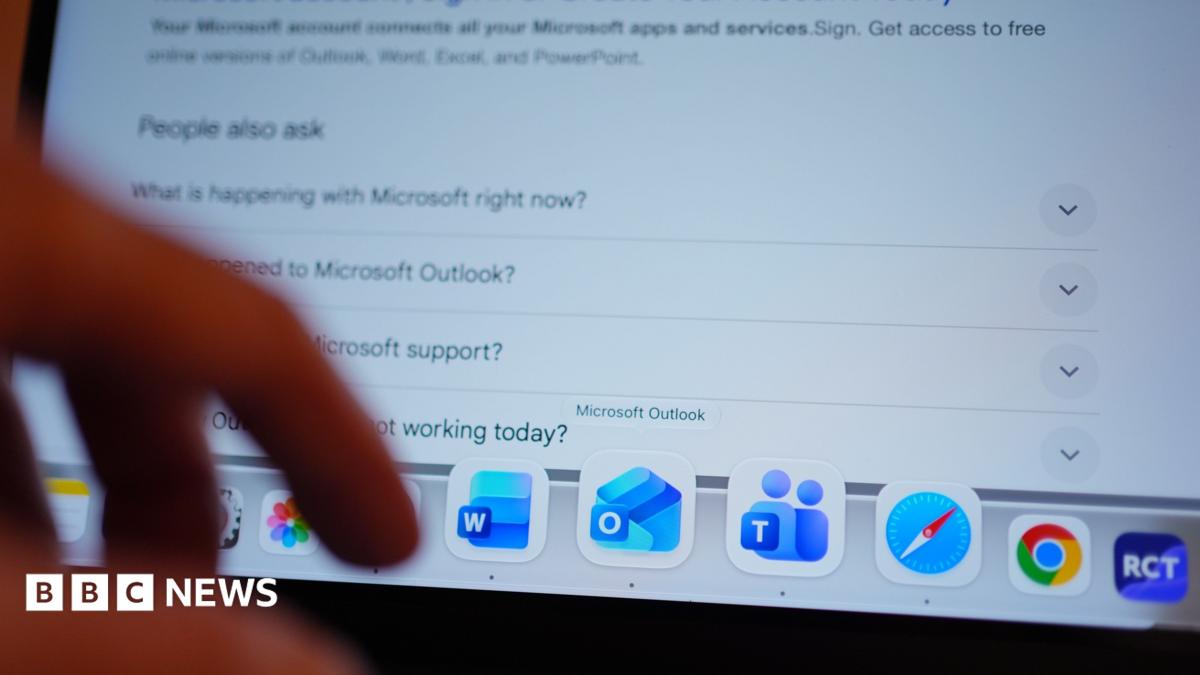
Dr Rory Hopcraft, a lecturer in cyber security at the University of Plymouth, said Friday was a "true test" of business continuity plans and disaster recovery plans. He said: "I think the biggest lesson we need to ask ourselves is: 'What happens when the technology that we rely on becomes unavailable.'" He said, for a business, that might look like using paper and a pen, or ringing people rather than emailing them, and for the everyday person using an "old-fashioned diary" to keep contact information or apportionment information. "Ultimate, technology is beneficial, but we also need to plan for its failure," he said.
Dr Alex Taylor, from the University of Exeter, said it would be a challenge to mitigate against similar problems in the future because each time they were slightly different, so it was a "continuous kind of learning curve". He added that a suggestion he heard from people in the field was "instead of moving everything to the [internet] cloud, we should be bringing some sort of data services and platforms back to on premise sort of office blocks instead, just because you've got more of a diversity of data storage options then." Follow BBC Cornwall on X , external , Facebook , external and Instagram , external . Follow BBC Devon on X , external , Facebook , external and Instagram , external .
Send your story ideas to spotlight@bbc.co.uk , external .
Source: BBC